Concept is King
OR how design is once again taking command in poster design
by Eric Holmquist
The film poster industry is one of the most exciting fields of design, to consumers and designers alike. For the consumer, the appeal of the movie poster never seems to disappear. It is the combination of powerful imagery and the personal connection with the subject matter that creates this appeal. For designers, no other medium has consistently provided the creative freedom allowed by film poster design. The art of the film poster goes back, to the early 1900s, about as far as film itself. Over the decades, the medium has been advanced by many talented designers, such as the great Saul Bass. Bass revolutionized the industry of film poster design with his stunning imagery that focused on the underlying concept of the movie, instead of just the actors in it. However, while Saul Bass had a long and prolific career, opinions and styles changed, and design began to take a back seat once again. Recently, good design has made a comeback in the film poster world, with groups like AllCity Media at the forefront.
AllCity Media, as a design firm, has existed for just over a decade, and in that time, they have clawed their way up from small independent projects to large international campaigns. Founded in 2000 by David Frost and Peter Jansen, under the motto “Concept is King”, AllCity has risen to the top with their stunning visuals and creative designs. At the time of AllCity’s crestion, film poster design as a medium had fallen into the habit of ignoring memorable design and underlying concepts in favor of showing off the lead actors. While AllCity still very often works with images of the film’s characters, their goal is still to tell the audience something about the film’s story, themes, or concepts though their poster. They’ll also often go outside the design firm, and collaborate with other artists in order to create the best visual concept that they can. Work such as the campaigns for Tyrannosaur, Mike Leigh’s Another Year, and The Girl with the Dragon Tattoo have attracted the attention of other designers, and propelled AllCity into the spotlight of film poster design.
Most of what AllCity stands for as a company harks back to the illustrious Saul Bass’s ideas about design. Bass was one of the most influential designers to ever live, and poster design was one medium that he was particularly important in developing. Bass has created some of the most lasting poster designs seen in film, including classics such as North by Northwest, West Side Story, and Anatomy of a Murder. Many of his groundbreaking poster designs were developed alongside his credit sequences. The Man with the Golden Arm (1955) was probably his most groundbreaking duo. Instead of featuring the lead man Frank Sinatra on the poster, Bass decided to make the main image a graphic representation of a heroin addict’s arm. This was nearly unheard of back then, so it was a controversial poster, for a controversial movie with a controversial subject. It worked. Bass’s decision to use the idea or message so boldly in the advertising changed the way films were promoted to the public.
Saul Bass created many of the most memorable designs in the public eye throughout his three decade career, lasting images that have stayed true to their concept over many years. Although the good design that flourished in poster design during his reign had waned, there have been young studios recently, studios like AllCity Media to pick up where he left off. A well-designed poster will always better affect the viewer, especially when there is a strong message or concept being conveyed. AllCity knows this, and Saul Bass knew this. If this trend continues, with groups like AllCity leading the front, we could have another golden age of poster design ahead of us. I, for one, would definitely look forward to that.
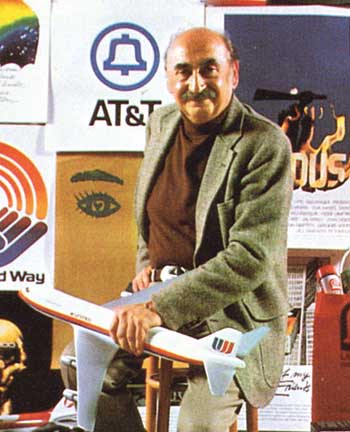
Saul Bass

AllCity Media